The Nordic diet.
Plain food.
Properly good.

Rye and oats. Roots and cabbage. Berries, rapeseed oil and a tin of mackerel. The northern answer to the Mediterranean diet — and almost all of it is already in your supermarket.

A practical place to begin. Our course is Coming Soon.

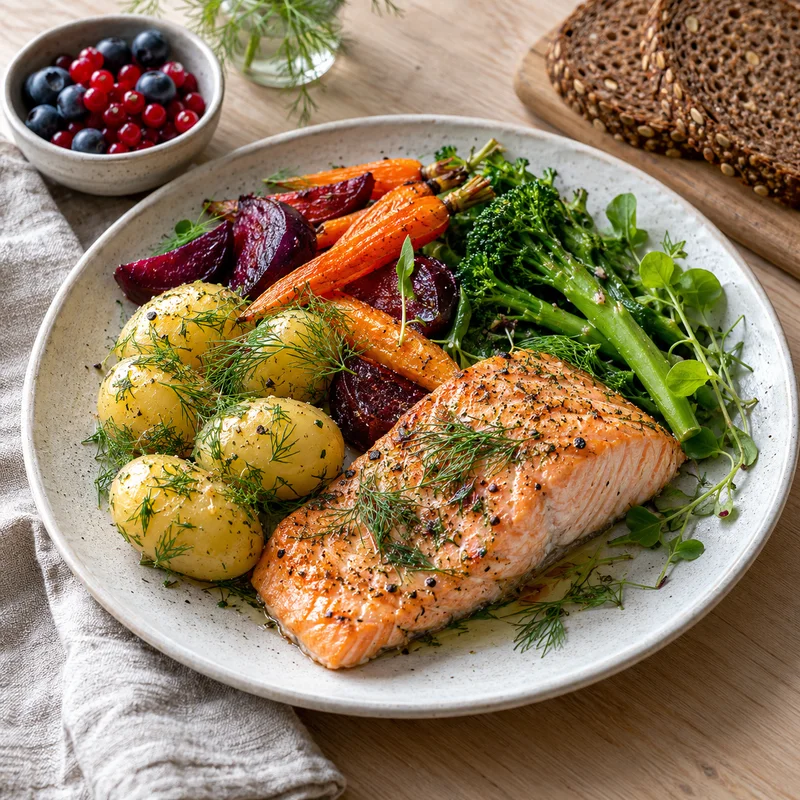
Nordic meal of salmon, dill potatoes, roasted root vegetables and greens, with rye bread and berries
Rye. Roots. Oily fish. Berries.

A Mediterranean diet
for a cold, wet country.

Same idea. Different weather. Different shopping list.

The Mediterranean diet works partly because it is built on what grows there. Up north, that list looks different: rye, oats and barley instead of pasta and white bread; rapeseed oil instead of olive; carrots, swede, beetroot and cabbage instead of aubergines and peppers; herring, mackerel and salmon instead of sardines and sea bass.

Put together, it is a way of eating that suits a British climate, a British supermarket and a British budget — without pretending you live somewhere sunnier.

Understand the approach
The free starter guide · Illustrated ebook preview

Free ebook

Put a Nordic way of eating on your plate, using ingredients from an ordinary British supermarket. Start with our practical guide to a week of northern food.

  • A flexible seven-day menu with everyday UK ingredients.
  • What to look for in rye, oats, barley and tinned fish.
  • A Nordic store-cupboard and freezer list.
  • Five simple meal ideas to get you started.

Small swaps.
Food you look
forward to.

Start with your usual meals. Change what they are built on, without losing the pleasure.

Pearl barley under a stew instead of white rice. An open rye sandwich with mackerel at lunch. Porridge with frozen berries instead of a cereal with sugar in it. Roasted roots on the tray you would have filled with chips.

You don’t need expensive “Scandi” products or a rigid rulebook. Choose one meal, keep what you like about it, and change the grain or the oil.

Wholegrain. Oily fish. A proper meal.

Try the everyday swaps

Learn the approach.
Make it your own.

Explore northern ingredients, simple swaps and cooking through a long winter.

Nordic diet introductionVideo coming soonWe’re preparing this introduction. Check back soon.

Our paid course is also in preparation. The price will be £47, including the £27 ebook. No confirmed launch date. No payments are being taken.

Explore the planned course

Nordic guidebooks & courses.

Go further with practical food guides and online learning.

Paid ebook

Nordic Diet
Guidebook

A more detailed guidebook is planned, to help you explore northern ingredients, seasonal meals and everyday food choices in a British kitchen.

This will be a paid ebook, separate from our free starter guide. Its final contents and release date are still to be confirmed.

Online learning

Nordic Diet
Online Video Course

A paid online course is in preparation, with practical learning about northern ingredients, cooking with the seasons and routines that fit everyday life.

The course is not available yet. Its final content and launch date have not been confirmed.

Includes the £27 ebook.

Explore the Guides

Both products are in preparation. No orders or payments are being taken.

Build your plate.

Four useful places to focus.

Good questions.
Clear answers.

Practical guidance before you start.

What is the Nordic diet?

It is the everyday eating pattern of Denmark, Sweden, Norway, Finland and Iceland: wholegrain rye, oats and barley; root vegetables and cabbage; berries; oily fish such as herring, mackerel and salmon; rapeseed oil; and modest amounts of meat and dairy. It is the northern equivalent of the Mediterranean diet, built on food that grows in a cold, wet climate.

Is it expensive or hard to shop for?

No. Oats, barley, carrots, swede, beetroot, cabbage, onions, frozen berries and tinned mackerel are among the cheapest things in any UK supermarket. Nothing needs importing and nothing needs a health-food shop.

Is this a low-carb diet?

No. Wholegrain rye, oats and barley are central to it. The emphasis is on the quality of the carbohydrate — wholegrain rather than refined — and on what sits alongside it, not on cutting carbohydrate out.

Do I have to eat fish?

It helps, and oily fish is one of the pattern’s clearest strengths. If you do not eat fish, eggs, pulses, rapeseed oil, nuts and seeds can cover much of the same ground. A dietitian can help if your diet is restricted.

Is the course available?

Not yet. A paid course is planned, but it is still in preparation. The price will be £47, including the £27 ebook. There is no confirmed launch date, and we are not accepting payments.

Should I change my medication?

No. If you take medication for diabetes, blood pressure or anything else, speak with your healthcare team before making a substantial change to how you eat. Never adjust medication based on this website.

Food, ideas
& useful reading.

All articles

Six reasons to eat
like a northerner.

  • Weight-management support

    Meals built on vegetables, wholegrains and a protein source can support weight loss and help maintain a healthy weight.

  • Heart health

    Oily fish, rapeseed oil, wholegrains and less saturated fat form an eating pattern that can support cardiovascular health.

  • Blood sugar support

    Choosing wholegrain rye, oats and barley over refined starches may help with blood sugar control, alongside appropriate care.

  • Fibre for digestion

    Rye, oats, barley, root vegetables and berries provide fibre that supports normal digestion.

  • Nutrient-rich food

    Oily fish, berries, seeds and dark leafy greens supply omega-3 fats, vitamins, minerals and useful nutrients.

  • Food you can afford

    Oats, barley, root vegetables, cabbage, frozen berries and tinned fish are among the cheaper things in any UK supermarket.